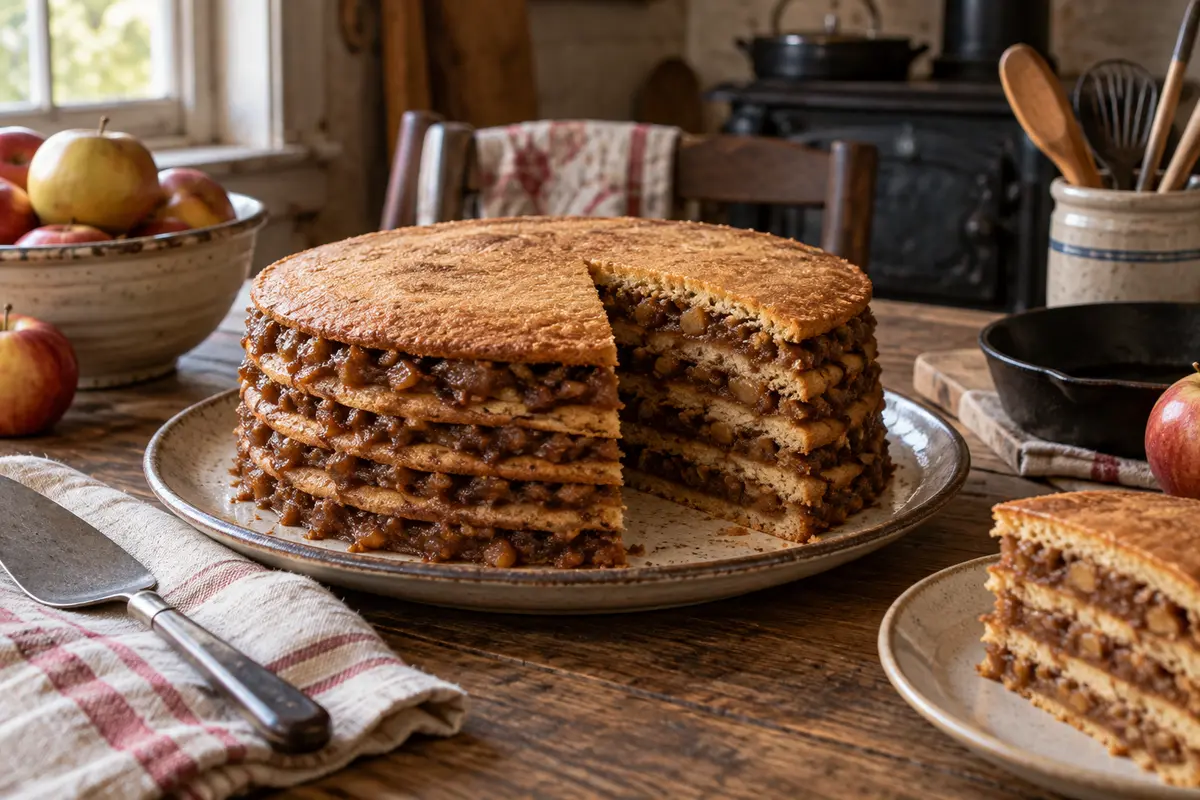
Apple stack cake becomes itself while it waits. Thin, sturdy layers absorb the spiced dried-apple filling overnight, settling into a tender, sliceable cake whose flavor is deeper on the second day.
At the Appalachian table
Apple stack cake is strongly associated with Appalachian home baking, where dried fruit could carry apple flavor through winter. Recipes differ from family to family—some use molasses, some sorghum, some more layers—but the patient overnight rest is central to the cake’s character.
Ingredients
Dried-apple filling
- 450 g dried apples
- 900 g apple cider or water, plus more as needed
- 180 g brown sugar
- 5 g ground cinnamon
- 0.5 g ground cloves
- Pinch of salt
Cake layers
- 300 g fresh-milled soft white wheat flour, finely sifted
- 6 g baking soda
- 5 g fine salt
- 3 g ground ginger
- 2 g ground cinnamon
- 115 g unsalted butter, softened
- 170 g brown sugar or sorghum
- 2 large eggs
- 120 g buttermilk
- Flour and butter for six 8-inch pans or one skillet used in batches
Method
- Combine all filling ingredients in a saucepan. Simmer gently 35–50 minutes, stirring often and adding water if needed, until the apples collapse into a thick, spreadable paste. Cool.
- Heat the oven to 375°F (190°C). Trace six 8-inch parchment circles or prepare 8-inch cake pans; a buttered cast-iron skillet may be used one layer at a time.
- Whisk flour, baking soda, salt, ginger, and cinnamon. Beat butter and sugar until combined, then beat in eggs. Add dry ingredients alternately with buttermilk to make a soft dough.
- Divide into six equal portions. Press or roll each portion into a very thin 8-inch round.
- Bake each layer 8–10 minutes, until set and lightly browned at the edge. Do not bake until crisp. Cool briefly.
- Place one warm layer on a plate and spread with one-fifth of the apple filling. Repeat, ending with a plain cake layer.
- Wrap the cake tightly and let it rest at cool room temperature 24 hours, or refrigerate up to 48 hours. Bring to room temperature before slicing.
Fresh-milled notes
Good to know: Weigh the dough, then divide by six for even layers.
Good to know: The filling must be thick enough to spread without running but moist enough to soften the cake.
Good to know: This is a make-ahead cake. Cutting it early gives dry layers instead of the unified stack-cake texture.
Appalachian Grain Table
Eight recipes where fresh-milled grain meets the foodways of home, season, and place.
Recommended tools
A digital scale, fine-mesh sifter, bench scraper, 8-inch cast-iron skillet or cake pans, and an offset spatula are helpful.
OXO 11-lb Digital Food Scale
Reliable gram weights for flour, liquid, and equal portions.
View on Amazon ↗Stainless Bench Scraper
Useful for dividing dough, cutting butter, and cleaning the work surface.
View on Amazon ↗Affiliate disclosure: As an Amazon Associate I earn from qualifying purchases. Recommendations are selected for practical usefulness.
Keep learning
Use the Fresh-Milled Flour Guide, consult the hydration guide, troubleshoot dense bread and sticky dough, and browse the recommended tools guide.