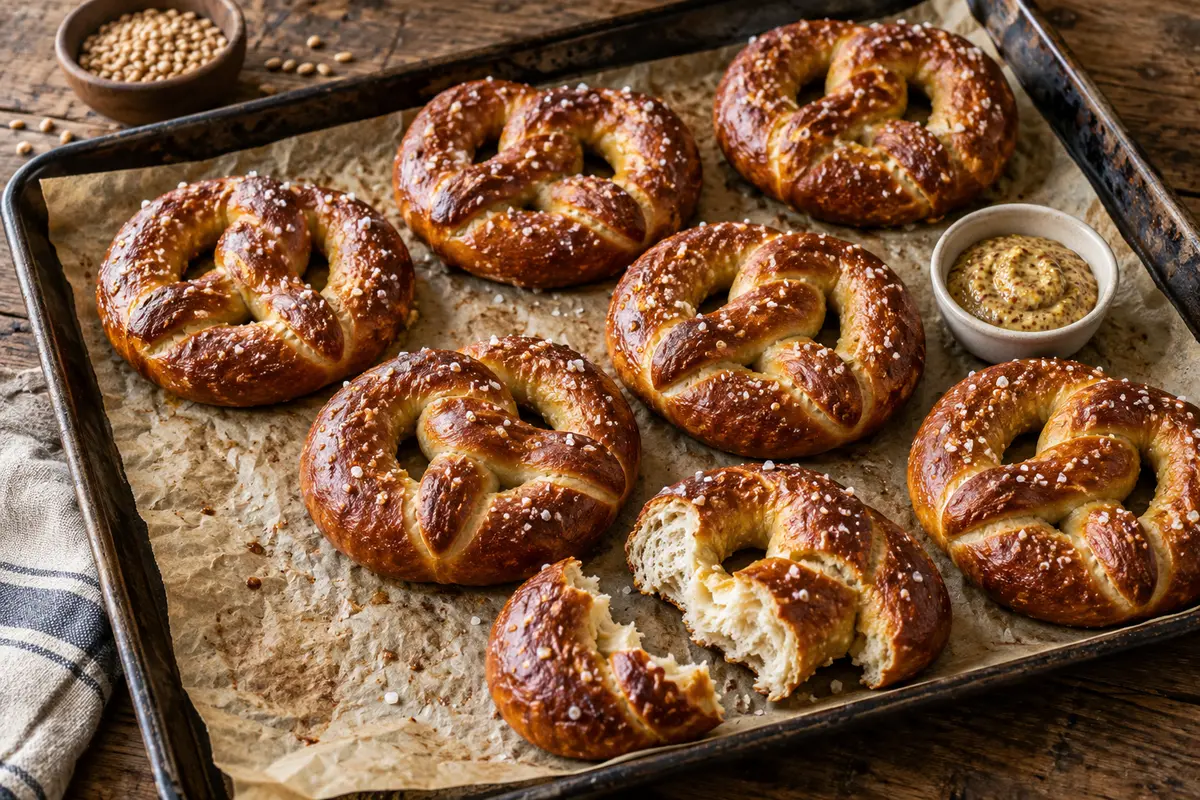
Pretzels welcome the savory tang of discard. The dough stays deliberately firm for clean shaping, while a short baking-soda bath produces the familiar polished brown crust without requiring food-grade lye.
Before you begin
This recipe is written for 100% hydration discard—starter maintained with equal weights flour and water. Use discard that smells pleasantly sour, yeasty, or mildly alcoholic. Throw it away if you see fuzzy mold, pink or orange discoloration, or smell anything rotten.
Ingredients
Dough
- 400 g fresh-milled hard white wheat flour
- 200 g sourdough discard, 100% hydration
- 180 g warm water
- 25 g brown sugar or honey
- 30 g unsalted butter, softened
- 10 g fine salt
- 5 g instant yeast
Bath and finish
- 2 L water
- 60 g baking soda
- 1 egg beaten with 15 g water, optional
- Coarse pretzel salt
Method
- Mix flour, discard, water, and sugar. Rest 15 minutes.
- Add butter, salt, and yeast. Knead 7–9 minutes into a firm, smooth dough.
- Cover and rise until 50–60% larger, about 60–80 minutes.
- Divide into eight pieces. Roll each into a 60 cm rope, form a U, twist the ends twice, and press them onto the lower curve.
- Heat the oven to 425°F (220°C). Bring 2 L water to a gentle simmer, carefully add baking soda, and line two pans.
- Lower pretzels into the bath for 20 seconds each. Drain well, arrange on pans, brush with egg wash if using, and salt.
- Bake 13–16 minutes, until deep mahogany. Cool 10 minutes before serving.
Fresh-milled notes
Good to know: A firm dough preserves the shape. Resist adding water unless dry flour remains after kneading begins.
Good to know: Add baking soda slowly—the water will foam. Use a wide pot with headroom.
Good to know: For the best crust, eat the pretzels the day they are made or rewarm at 325°F.
Sourdough Discard Collection
Eight practical ways to turn refrigerated discard into bread, breakfast, supper, and snacks.
Recommended tools
Affiliate disclosure: As an Amazon Associate I earn from qualifying purchases. Recommendations are selected for practical usefulness.
Keep learning
Use the Fresh-Milled Flour Guide, consult the hydration guide, troubleshoot dense bread and sticky dough, and browse the recommended tools.