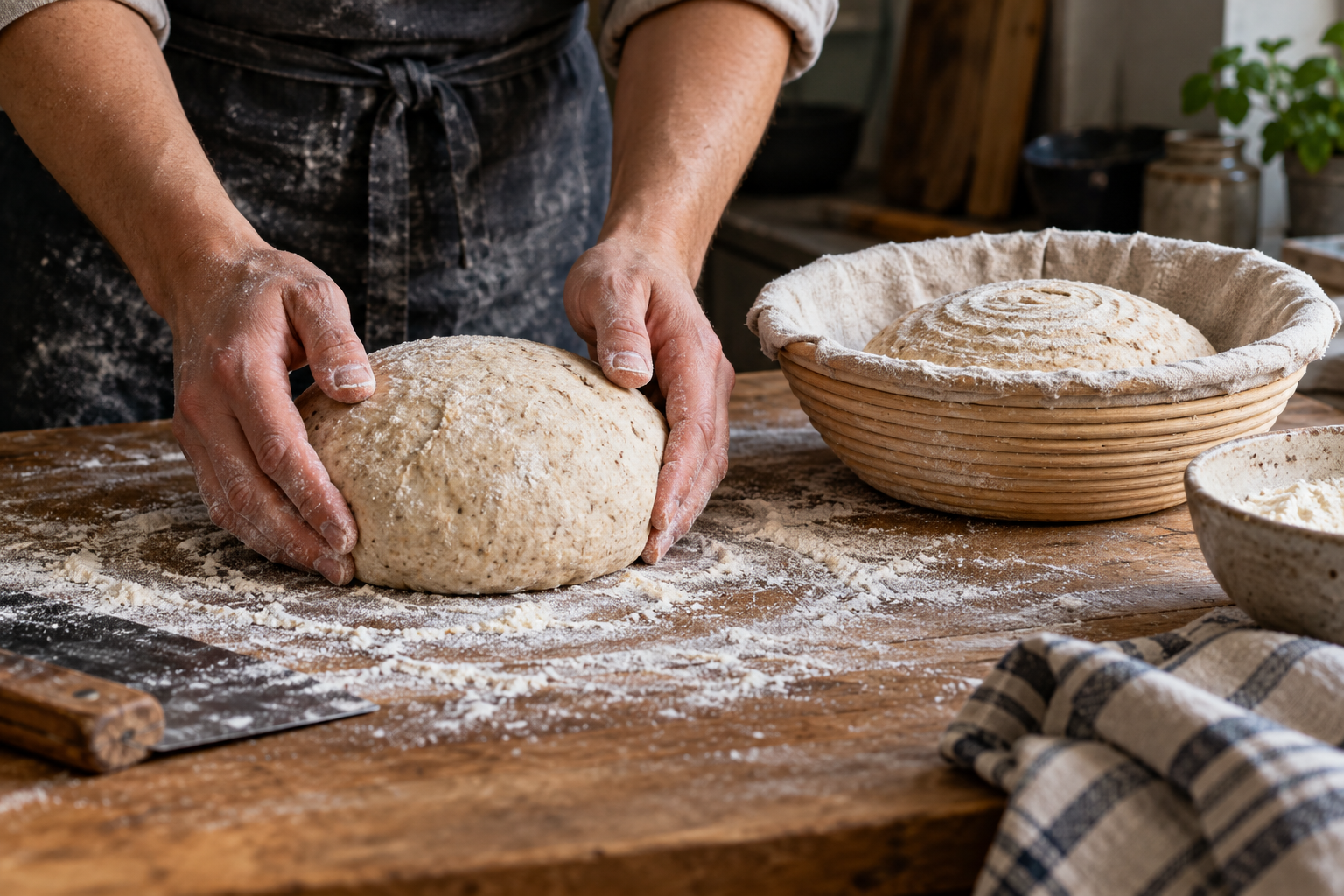
Ancient-grain dough can feel ready in the bowl and then spread the moment it touches the bench. Shaping can organize the dough, but it cannot rebuild gluten that has already broken down. The best results begin with a moderate hydration, a complete but not excessive bulk rise, and a light hand.
Start with the right expectation
Einkorn is naturally soft and sticky; spelt stretches easily but can lose tension; emmer may resist a lofty free-form shape. A pan or supported banneton is often the sound choice for a high-percentage ancient-grain loaf.
Prepare the bench
Lightly flour the surface and your hands. Tip the dough out without tearing it. If it pours like batter, stop and use a loaf pan. If it holds a soft mound, proceed with a bench scraper close by.
Pre-shape once, then rest
Fold the outer edges toward the center and turn the dough seam-side down. Cup it lightly to make a round. Rest 10–15 minutes uncovered; shorten the rest if the dough starts spreading rapidly.
Build only the tension the dough will take
For an oval loaf, gently pat to a rectangle, fold the sides inward, roll toward you, and seal the seam with fingertips. Avoid repeated tightening passes. Move seam-side up into a well-floured banneton. For fragile einkorn, a parchment-lined loaf pan is more dependable.
Proof and bake for structure
Do not wait for every ancient-grain dough to double. Look for a visibly aerated surface and a modest rise. Chill a banneton briefly if you need a cleaner score, then bake promptly in a thoroughly preheated covered vessel. A pan loaf can go directly into the oven once it has risen appropriately.
Next bake, change only one variable: slightly less water, a shorter bulk, or more strong wheat in the blend. Keep notes so the dough teaches you what worked.
Grains & tools
Use the gear you already own. A gram scale and a fine-mesh sifter are handy for these methods.
OXO digital scale · Fine-mesh sifter
Affiliate disclosure: As an Amazon Associate I earn from qualifying purchases. I may also earn from qualifying King Arthur Baking purchases through Awin.