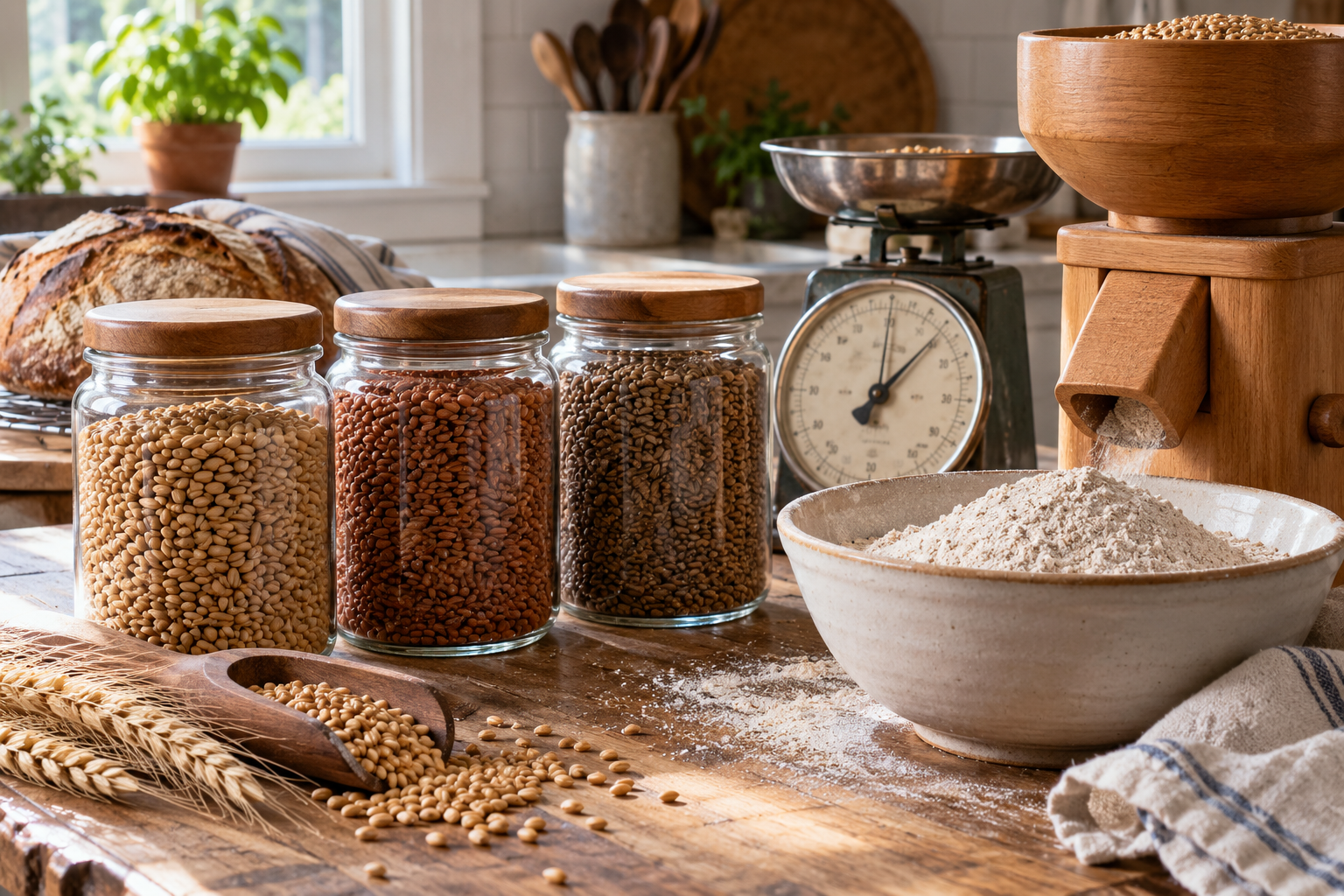
Two bakers can use the same wheat berries and water yet get different dough. The grind matters. Fine flour hydrates and develops differently from coarse meal, while large bran flakes can interrupt the gluten network in a lean loaf.
Practical starting point
For sandwich bread and rustic wheat loaves, use the finest setting your mill handles comfortably. For cornbread-style bakes, crackers, or porridge, a coarser grind can be welcome.
What changes in the bowl?
| Grind | Likely feel | Useful adjustment |
|---|---|---|
| Fine whole grain | Smoother dough with bran dispersed | Rest 20–30 minutes before judging water. |
| Coarse flour | Grittier texture and less even strength | Allow a longer hydration rest; consider sifting large flakes. |
| Sifted fine flour | Lighter dough, lower bran content | Hold back a little water at first. |
Run a simple comparison
Mill the same grain into two 300 g batches, one fine and one moderately coarse. Keep salt, yeast or starter, water, dough temperature, and pan the same. Reserve 15 g of water in each dough. After a 25-minute rest, add only what each needs to become soft but shapeable. Record rise, loaf height, and crumb the next day.
A few cautions
Never force a mill beyond its manufacturer's settings, and let warm flour cool before judging dough temperature. Coarse flour may keep absorbing water during bulk fermentation; resist adding a large amount immediately after mixing. Sifting changes extraction as well as particle size, so it is a separate variable.
The best setting is the one that gives you repeatable dough for the bread you want. Start fine, then adjust deliberately.
Grains & tools
Use the gear you already own. A gram scale and a fine-mesh sifter are handy for these methods.
OXO digital scale · Fine-mesh sifter
Affiliate disclosure: As an Amazon Associate I earn from qualifying purchases. I may also earn from qualifying King Arthur Baking purchases through Awin.