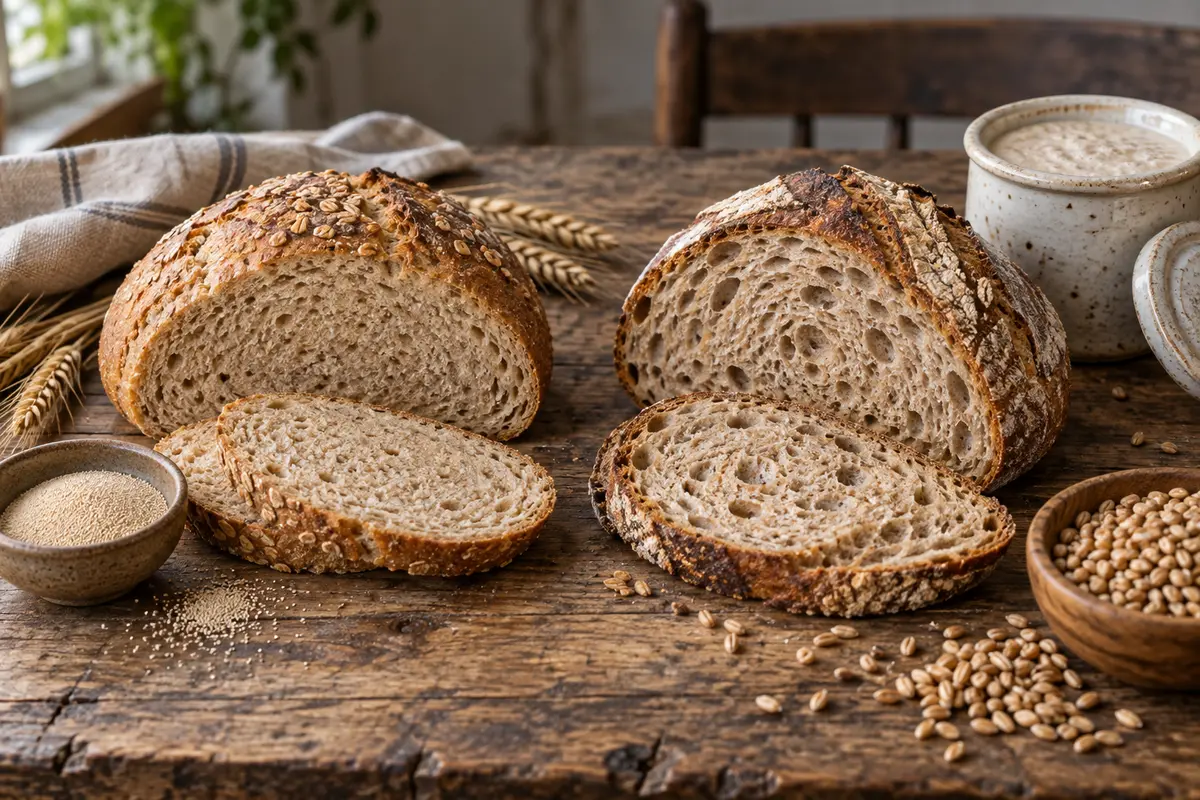
Commercial yeast provides speed and predictability. Sourdough adds acidity, fermentation flavor, and a flexible schedule. Neither automatically produces better bread, and ancient grains do not award extra credit for making the process harder than necessary.
The useful answer
This guide gives you a starting point, then shows you what to observe and record in your own kitchen. Grain variety, mill setting, temperature, and recipe design all matter more than a single universal rule.
The leavener is a tool, not a loyalty oath
The best choice depends on the grain, desired flavor, available time, and whether the dough can tolerate a long fermentation.
Compare the three sound options
| Method | Strength | Watch-out |
|---|---|---|
| Commercial yeast | Predictable rise; mild flavor; shorter schedule | Easy to overproof warm, delicate dough |
| Sourdough | Flavor, acidity, longer scheduling window | Starter strength and temperature add variables |
| Hybrid: starter/discard + yeast | Sourdough character with reliable lift | Still requires proofing by cues, not time |
Best starting choice by grain
| Grain | Beginner choice | Why |
|---|---|---|
| Hard white/red wheat | Either | Strongest gluten and widest tolerance |
| Spelt | Yeast or young levain | Good expansion but easy to overferment |
| Kamut | Yeast or hybrid | Extensible dough benefits from controlled timing |
| Emmer | Hybrid or pan-loaf sourdough | Flavorful but less gas-holding strength |
| Einkorn | Yeast or carefully timed sourdough pan loaf | Fragile dough rewards modest proofing |
| Rye | Sourdough | Acidity supports rye bread structure and flavor |
Acidity can help—and time can hurt
Sourdough fermentation changes flavor, dough acidity, and microbial activity. In rye, controlled acidity is central to successful bread. In fragile ancient wheat doughs, however, a long warm fermentation can eventually weaken handling tolerance. “Longer” and “healthier” are not interchangeable baking instructions.
Keep careful track of dough temperature. A vigorous levain at 78°F may move much faster than the same formula at 68°F.
A practical decision rule
- Choose yeast for dependable weekday sandwich bread.
- Choose sourdough when fermentation flavor is the main goal and you know your starter.
- Choose hybrid fermentation for enriched dough, discard recipes, or ancient-grain loaves that need schedule insurance.
Whichever method you choose, stop fermentation while the dough still has enough strength to shape and bake. Read the grain-by-grain sourdough comparison.
Useful tools
Affiliate disclosure: As an Amazon Associate I earn from qualifying purchases. Recommendations are selected for practical usefulness.