All grains, milling equipment, baking tools, and other products used or recommended in this recipe are gathered in the product guide at the bottom of this page.
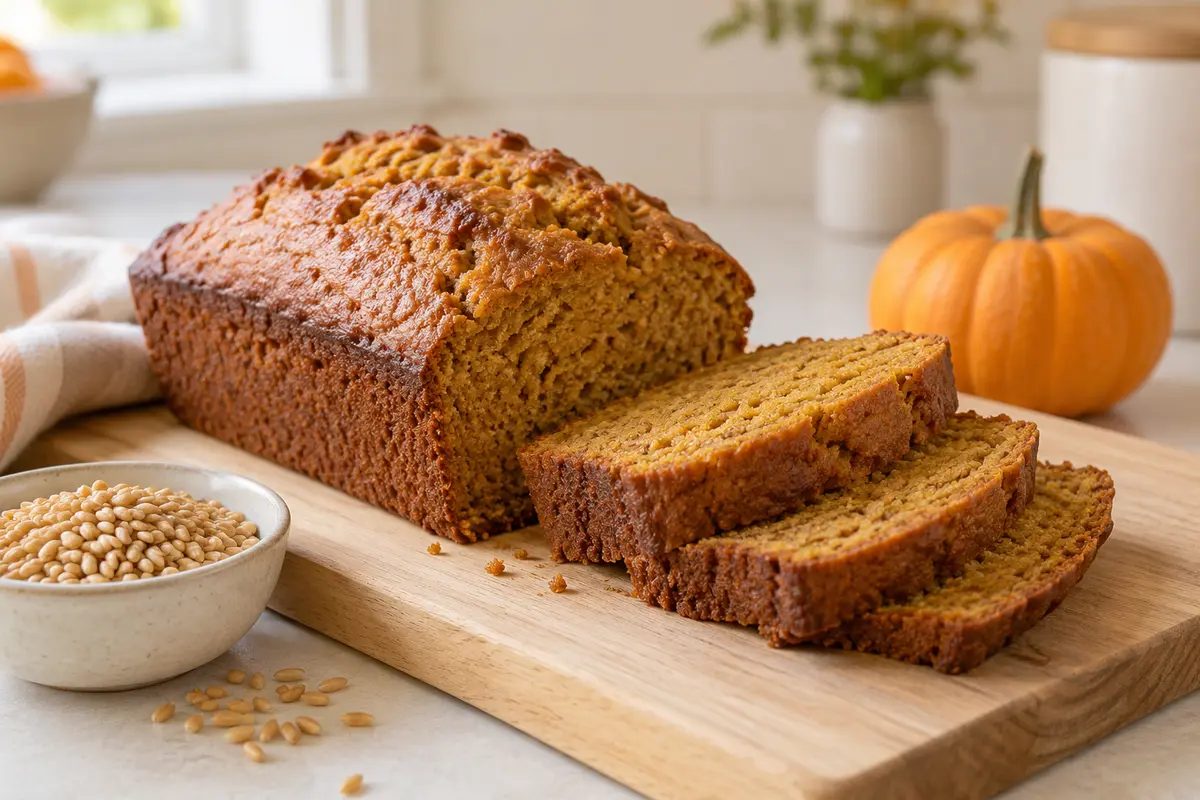
This is the sort of recipe that shows why home milling is worth learning. Whole berries become fragrant flour, the flour gets a short rest to soften its bran, and an ordinary pumpkin loaf comes out tasting unmistakably of grain—not merely spice and sugar.
Why spelt works here
Spelt has a mild, naturally sweet and nutty flavor that sits comfortably beside pumpkin, maple, cinnamon, and ginger. Its gluten is more delicate than modern bread wheat, but quick bread does not need a strong gluten network. Restrained mixing keeps the loaf tender.
Use clean, dry whole spelt berries. Do not rinse them before milling; moisture can damage some mills. Always follow your mill maker’s approved-grain list and operating instructions.
How to mill the berries
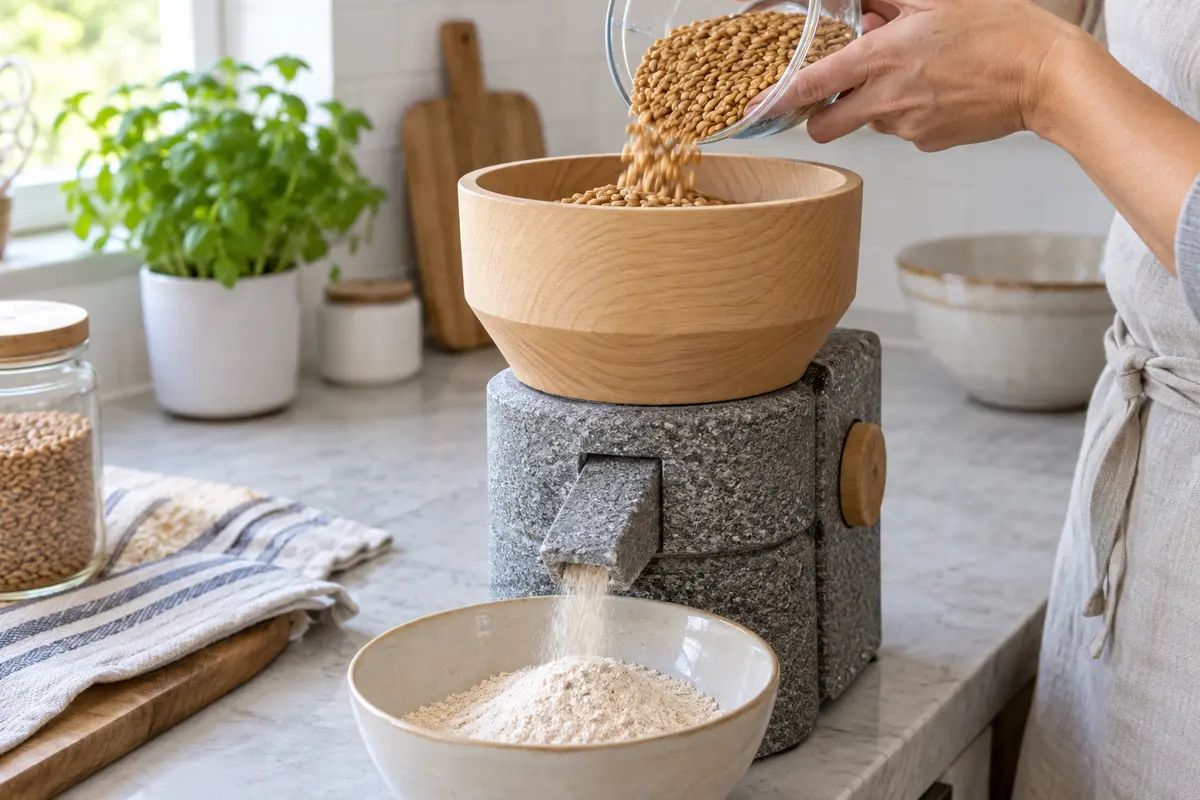
- Inspect and weigh. Pick through 305 g spelt berries and remove foreign material. The allowance covers flour left in the mill; weigh 300 g flour for the batter.
- Choose a fine setting. On an adjustable stone mill, move toward a fine bread-flour texture while the stones are running. The flour should feel soft with visible fine bran—not gritty meal.
- Mill steadily. Start the machine first if its manual requires it, add berries steadily, and use a roomy receiving bowl. Never mill damp grain or reach into a running hopper.
- Check temperature. Warm flour is normal; hot flour is not. Keep it below roughly 110°F. If unusually hot, stop, check setting and airflow, and let mill and flour cool.
- Use promptly. Stir to distribute the bran and use once room temperature. Fresh flour continues absorbing liquid for several minutes.
Fresh-Milled Maple Pumpkin Spelt Bread
A moist, sliceable 9-by-5-inch loaf with maple sweetness and balanced fall spice.
Ingredients
- 305 g dry spelt berries, to yield 300 g flour
- 245 g plain pumpkin purée—not pie filling
- 60 g whole-milk yogurt
- 100 g egg (about 2 large)
- 90 g unsalted butter, melted and cooled
- 120 g pure maple syrup
- 70 g packed brown sugar
- 5 g vanilla extract
- 5 g baking powder
- 4 g baking soda
- 5 g fine salt
- 5 g cinnamon
- 2 g ginger
- 1 g nutmeg
- 0.5 g cloves
- 75 g walnuts or pecans, optional
Method
- Prepare. Heat oven to 350°F with a center rack. Grease a light-colored 9-by-5-inch loaf pan and add a parchment sling.
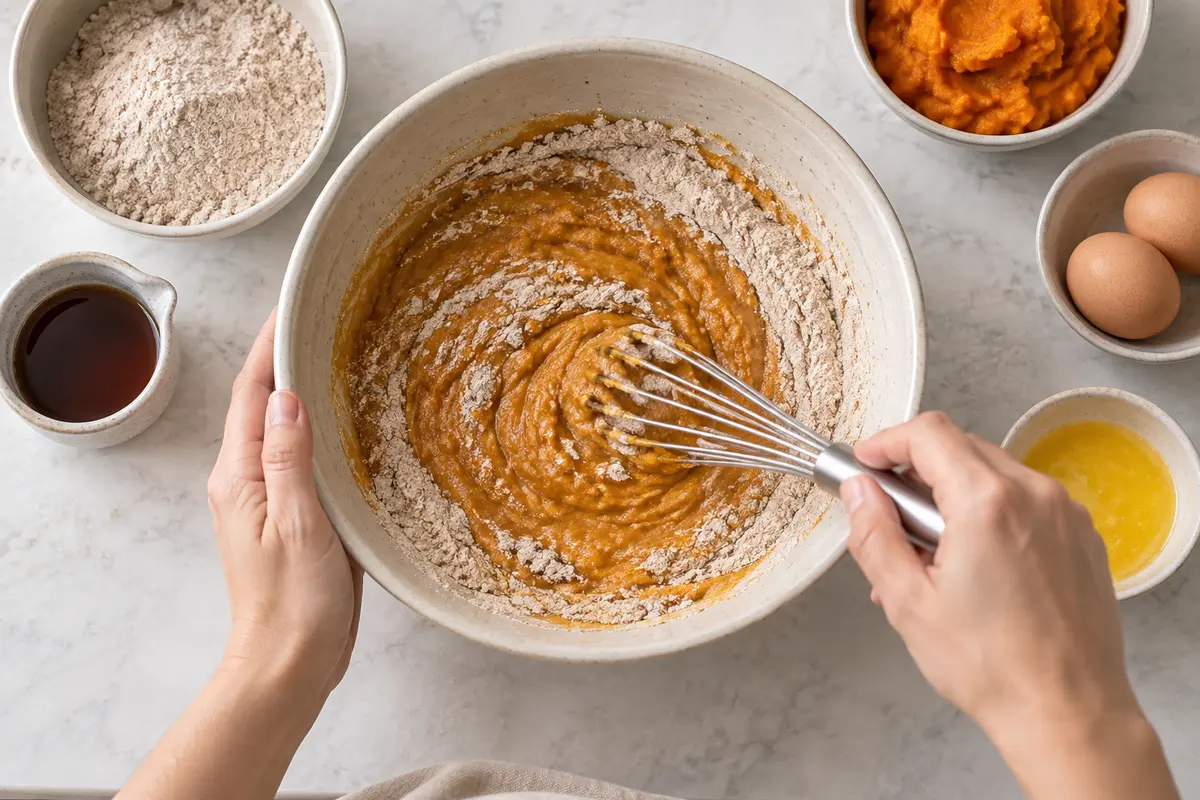
- Hydrate the bran. Stir 300 g fresh flour with pumpkin and yogurt. Cover and rest 15 minutes. This short rest softens fresh bran before the leaveners enter.
- Mix wet ingredients. Whisk eggs, cooled butter, maple syrup, brown sugar, and vanilla; stir into the rested mixture.
- Add lift and spice. Whisk baking powder, soda, salt, and spices separately. Sprinkle over batter and fold gently just until no dry streak remains. Fold in nuts if using. Batter should be thick but spreadable.
- Bake. Fill the pan and bake 55–65 minutes. Rotate after 40 minutes if needed. Tent loosely with foil if well browned before the center sets.
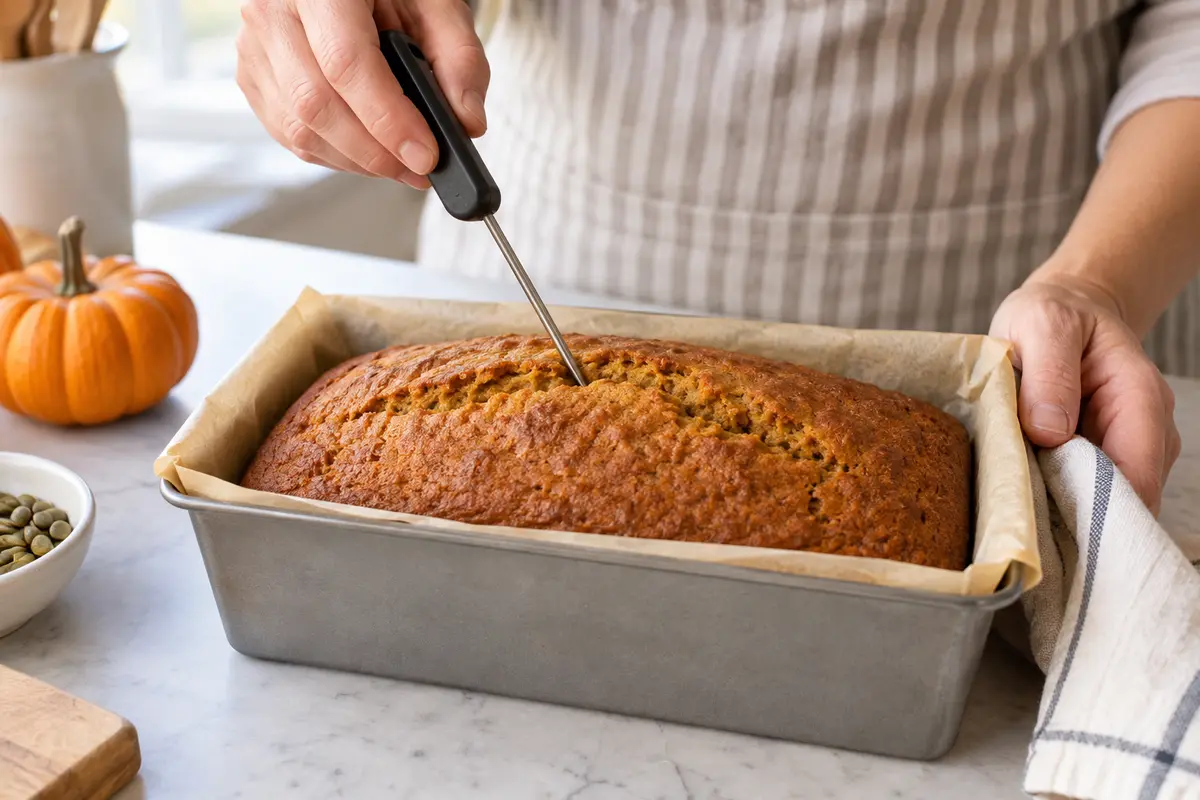
- Test. A skewer should show a few moist crumbs, not wet batter. The center should reach 200–205°F.
- Cool. Rest 15 minutes in the pan, lift out, and cool completely on a rack before slicing.
Read the batter
The batter should mound softly from a spatula and settle slowly. If it stands like biscuit dough, fold in 15–30 g milk, one spoonful at a time. If it pours like pancake batter, fold in 15–25 g more spelt flour and record the adjustment.
Troubleshooting
- Gummy center: underbaked or sliced warm. Verify temperature and cool fully.
- Rubbery crumb: batter was mixed too aggressively after adding leaveners.
- Dry loaf: too much flour or too long in the oven; weigh ingredients.
- Dark edges: use a light metal pan and tent the top.
- Soapy flavor: whisk soda and other dry seasonings together before folding in.
Substitutions
Einkorn: replace gram for gram, shorten the rest to 10 minutes, and expect a delicate crumb. Emmer: replace up to half the spelt for deeper flavor. No yogurt: use sour cream or buttermilk. Less sweet: reduce brown sugar to 40 g but keep the maple syrup for moisture.
Storage
Once cool, keep tightly wrapped at room temperature up to three days. Freeze separated slices up to two months. Refrigeration extends storage but firms the crumb.
Products used and recommended
Choose one mill. The guide links cover the supporting scale, pan, thermometer, and current grain sources.
Affiliate disclosure: As an Amazon Associate, The Grainiac earns from qualifying purchases. The site may receive a small commission at no extra cost to you.