The short answer
Cool dough ferments more slowly. For many wheat-based lean breads, a finished dough temperature around 75–78°F is a useful starting target. Spelt, einkorn, emmer, and Khorasan doughs often benefit from the lower part of that range because warmth accelerates fermentation while their gluten can weaken sooner than modern bread wheat.
Why the season changes your bread
Flour, mixing bowl, water, starter, and room all influence finished dough temperature. In autumn, grain stored in a cool pantry and a cold countertop can pull a dough several degrees below its summer norm. Yeast does not read the recipe’s “90 minutes”; it responds to temperature, food, acidity, and dough condition.
Choose a practical target
| Dough | Useful starting target | Reason |
|---|---|---|
| Hard-wheat lean bread | 75–78°F | Balanced strength and fermentation speed. |
| Spelt or emmer blend | 74–76°F | Encourages fermentation without rushing fragile structure. |
| High-einkorn dough | 72–75°F | Helps limit excessive slackening. |
| Enriched dough | 76–79°F | Butter, eggs, and sugar slow fermentation. |
These are starting points. Your starter strength, yeast amount, flour blend, and schedule may justify another target.
Use water temperature as the control
The water is the easiest ingredient to adjust. If the room, flour, and bowl are cool, use warmer—not hot—water. After mixing, take the dough temperature and write it down. Next bake, adjust water by several degrees based on the result. Avoid very hot water, which can damage yeast or create warm pockets.
Build a safe proofing place
- Use the oven with only the light on, but verify the temperature; some ovens become surprisingly warm.
- Set the container in a switched-off microwave beside a mug of hot water.
- Use a proofing box or cooler with gentle heat and a separate thermometer.
- Keep dough away from direct radiator heat, which warms the outside unevenly.
Read the dough, not merely the timer
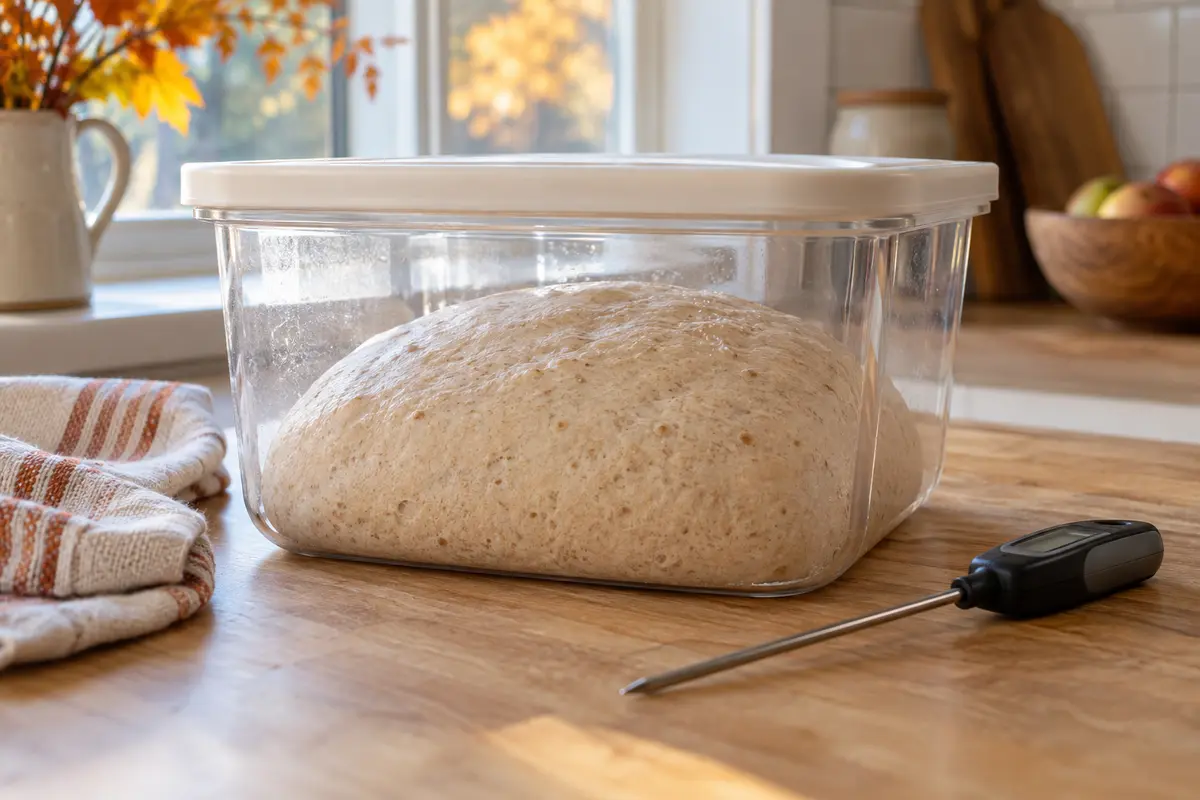
A cooler dough may need substantially longer bulk fermentation. Watch for aeration, a gently domed surface, bubbles along a clear container, increased elasticity, and the appropriate rise for the flour. High percentages of ancient grain often should not double. Waiting for a dramatic doubling can leave a spelt or einkorn dough weak and difficult to shape.
When temperature is not the culprit
If warm dough still barely rises, inspect starter activity, yeast age, salt measurement, hydration, and flour strength. If a cool dough spreads, excess water or weak gluten may be the larger problem. Temperature explains fermentation speed; it does not repair every formula.
A dependable cool-weather routine
- Measure room and flour temperature.
- Choose water temperature deliberately.
- Measure dough immediately after mixing.
- Use a marked straight-sided container.
- Record rise, time, temperature, and dough feel.
- Change one variable on the next bake.
Helpful temperature tools
An instant-read thermometer and a clear proofing container remove much of the seasonal guesswork.
See thermometers and proofing tools → Browse grain and equipment resources →
Affiliate disclosure: Some linked products may earn The Grainiac a commission at no extra cost to you.