All grains, mills, pastry tools, and products used or recommended here are collected in the product guide at the bottom of the page.

Hand pies are forgiving, useful food. They do not demand the height of a loaf or the tenderness of a layer cake. That makes them an excellent place to learn emmer: its deep wheat flavor belongs beside roasted squash and sage, while cold butter supplies the flake that whole-grain pastry needs.
Begin with the berries
Inspect 320 g clean, dry emmer berries. Mill on a fine pastry or bread-flour setting, then weigh 310 g flour. The extra berries allow for flour left inside the mill. Emmer flour may emerge warm; spread it in a shallow bowl until it is room temperature before adding butter.
Roasted Squash & Sage Emmer Hand Pies
Emmer pastry
- 310 g fresh-milled emmer flour
- 8 g fine salt
- 170 g very cold unsalted butter, ½-inch cubes
- 90–110 g ice water
- 15 g apple cider vinegar
Filling and finish
- 500 g peeled butternut squash, ½-inch cubes
- 150 g yellow onion, thinly sliced
- 20 g olive oil
- 8 fresh sage leaves, chopped
- 3 g salt and 1 g black pepper
- 80 g sharp cheddar, optional
- 1 egg beaten with 10 g water
Make the pastry
- Whisk flour and salt. Toss in butter, then flatten cubes between thumb and forefinger until most are dime- to nickel-sized.
- Mix vinegar with 90 g ice water. Drizzle over flour while tossing. Add the remaining water only until a squeezed handful holds together. Emmer becomes pasty if overwatered.
- Press the shaggy dough into a rectangle, fold it in thirds once, wrap, and refrigerate 60 minutes.
Roast and cool the filling
- Heat oven to 425°F. Toss squash and onion with oil, salt, and pepper. Roast 25–30 minutes, stirring once, until tender and browned at the edges.
- Stir in sage and cool completely. Warm filling melts pastry butter. Fold in cheddar after cooling, if using.
Shape and bake

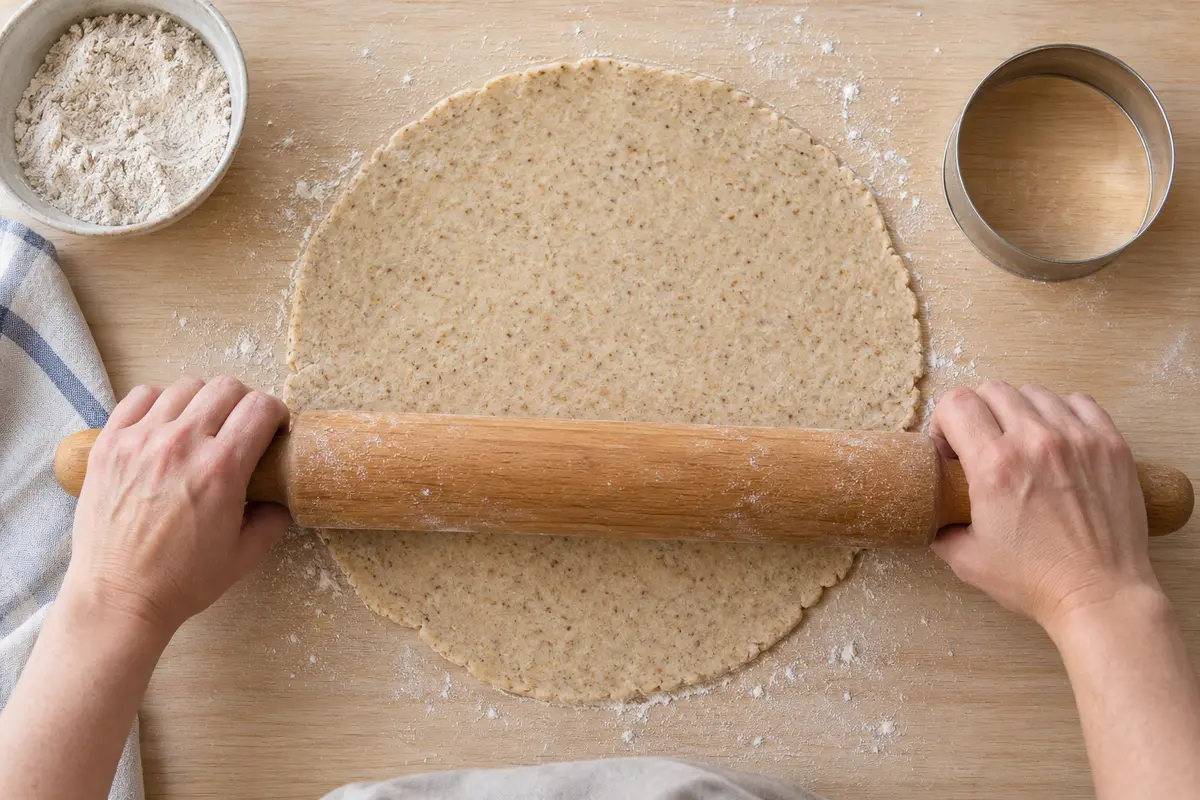
- Lower oven to 400°F. Roll half the cold pastry to about ⅛ inch. Cut 6-inch rounds; reroll scraps only once.
- Place 45–50 g cooled filling just off center. Moisten the rim lightly, fold, press out trapped air, and crimp firmly with a fork.
- Transfer to parchment-lined pans and chill 15 minutes. Cut two small vents, brush with egg wash, and bake 25–30 minutes until deeply golden. Cool 10 minutes before eating.
The cues that matter
- Dough cracks when folded: it needs a few grams more water or five minutes to relax.
- Dough smears and sticks: the butter is too warm; chill it before continuing.
- Bottom crust is pale: preheat a heavy sheet pan and set the hand-pie pan on it.
- Filling leaks: use less filling, cool it fully, and keep the sealing rim clean.
Make-ahead and storage
Freeze unbaked pies on a tray, then bag for up to two months. Brush frozen pies with egg wash and bake without thawing, adding roughly 8–12 minutes. Baked pies keep three days refrigerated; reheat at 350°F until crisp. A microwave warms them but makes the crust surrender.
Products used and recommended
Emmer berries and baking tools
Find grain sources, scales, thermometers, pans, and storage.
Browse resources →Affiliate disclosure: As an Amazon Associate, The Grainiac earns from qualifying purchases at no extra cost to you.